
Changing the gullet bar doesn’t change the whole tree. Here’s what riders need to understand.
Adjustable saddles have been one of the most useful developments in modern saddle fitting.
For horses that are changing shape, young horses developing through their work, or owners who simply want a little more flexibility, a changeable gullet system can be genuinely useful.
But the word adjustable can also create a slightly misleading impression.
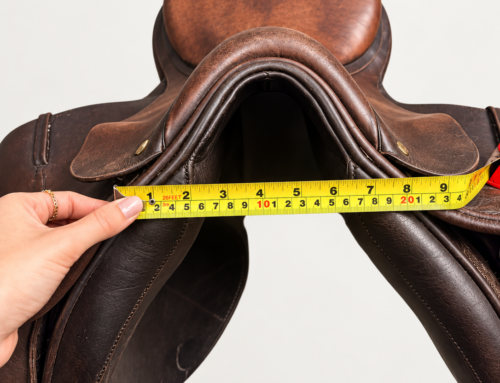
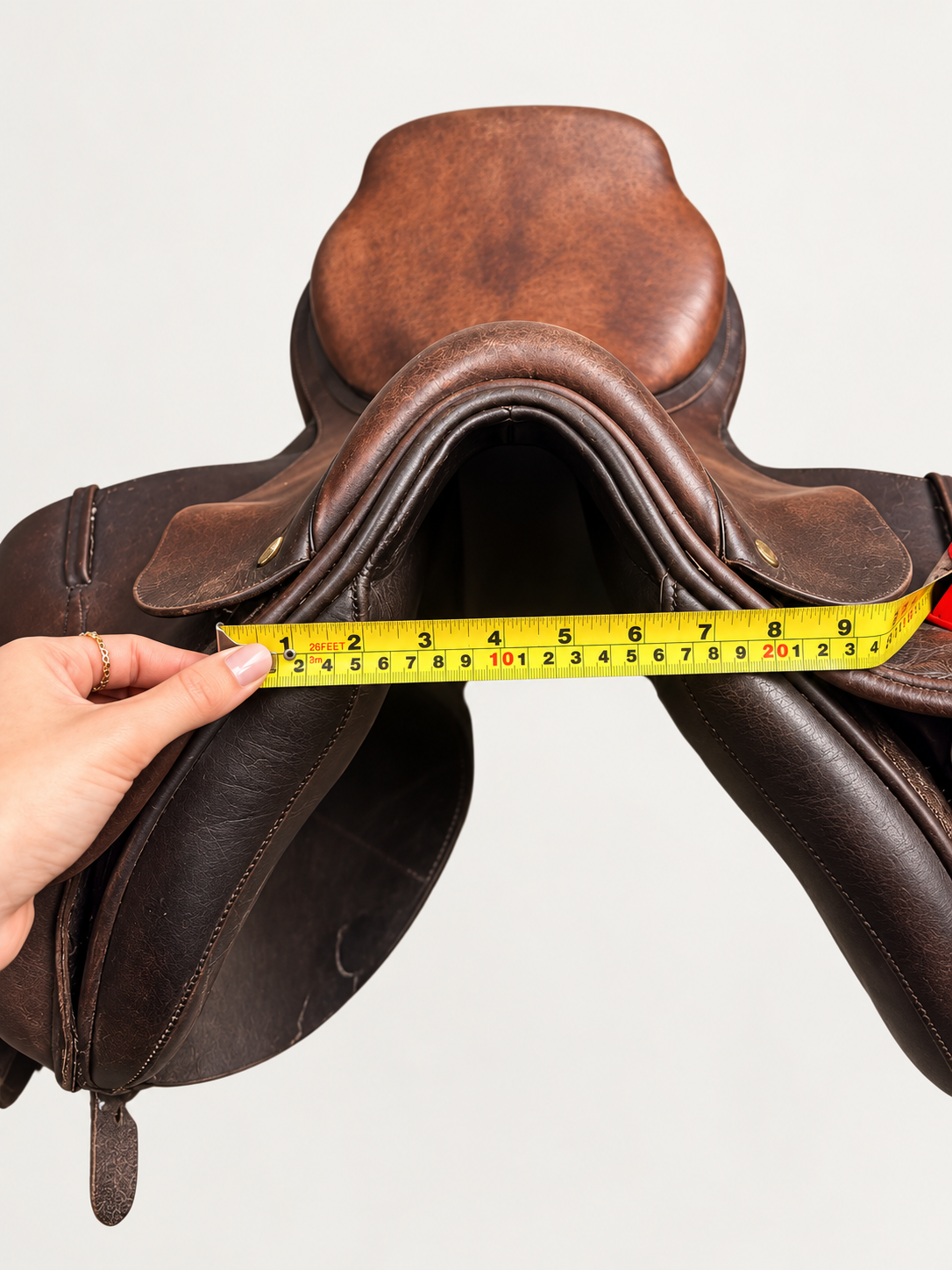
Change the gullet plate and you can alter the width at the front of the saddle.
What you haven’t done is turn that saddle into an entirely different tree.
And that distinction matters.
What actually changes when you change the gullet?
In most changeable-gullet systems, the plate alters the width and angle at the front of the tree.
That can make a significant difference to how the saddle sits around the wither and behind the shoulder.
What it doesn’t automatically change is everything behind it.
The overall shape of the tree remains. The rails still follow the same basic geometry. The relationship between the front and rear of the saddle remains largely determined by the tree it was built on. The panels underneath it have not suddenly become a different shape either.
So a saddle fitted with a wider gullet has become a wider version of that saddle.
It hasn’t necessarily become the right tree for a completely different shape of horse.


Wide isn’t a tree shape
Two horses might both technically require the same width at the front and yet need quite different saddles.
One might be broad through the front but have a more conventional shape through the wither and back.
Another may be broad, low-withered and much flatter through the back.
Fit the same-width gullet into two different tree types and the result can still be very different.
That is why manufacturers produce different saddle profiles rather than one adjustable saddle that supposedly fits everything.
Many to offer different profiles for standard, cob and higher-withered conformations rather than relying on width adjustment alone.
The gullet width is part of the picture.
It is not the whole picture.
Making a standard tree wider doesn’t make it a hoop tree
This is one of the misunderstandings I see around adjustable saddles.
If you put a very wide gullet into a standard tree, you haven’t automatically created a hoop tree.
Equally, narrowing a saddle that was designed around a broader, lower-withered shape does not necessarily create the geometry required by a horse with a more prominent wither.
The shape through the head of the tree, the length and orientation of the points, the rail profile and the wider tree geometry all influence how that saddle relates to the horse beneath it.
This is why I’m cautious about reducing saddle fit to statements such as:
“My horse is an extra-wide.”
Extra-wide tells me something.
It doesn’t tell me what shape of saddle the horse needs.
The panels matter too
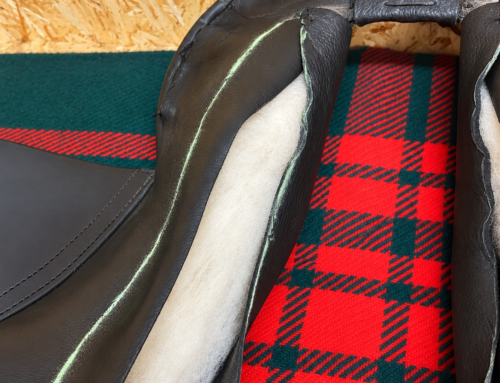
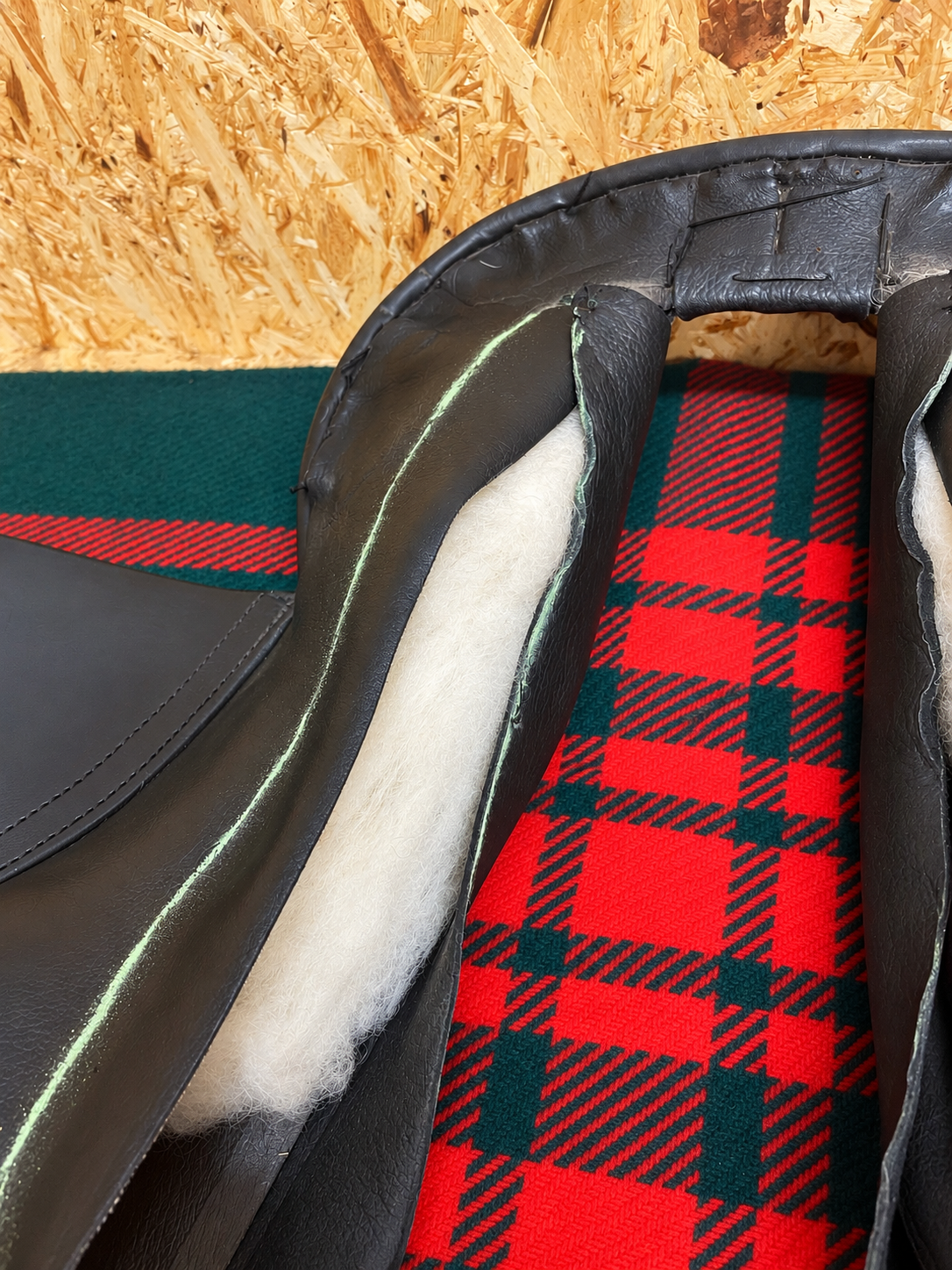
Underneath the tree sits another part of the equation: the panels.
Their shape, depth and configuration affect how the saddle balances and how pressure is distributed across the horse’s back.
A drop panel provides additional depth and support through the front of the saddle. It can be useful where more accommodation or lift is required around that area.
A deeper rear gusset changes the support and lift available at the back of the saddle and can have a significant effect on overall balance.
These are design features built into the panel itself.
Changing the gullet width doesn’t create a drop panel.
And altering the width at the front doesn’t suddenly give the saddle a deeper rear gusset.
So even when the front width changes, the saddle still retains the panel geometry it was designed with.
That is another reason why simply making a saddle wider or narrower cannot transform it into every other saddle in the range.
So are adjustable saddles a bad idea?
Not at all.
In the right situation, they can be incredibly useful.
A young horse may develop and broaden through work. A horse coming back into condition can alter shape. Weight, muscle, workload, turnout and age can all change the horse standing underneath the saddle.
Being able to alter the front of an otherwise suitable saddle gives the fitter another useful tool.
Some adjustable ranges have also been deliberately designed around several different horse shapes, making the system far more useful than simply offering one tree with a selection of coloured plates.
Different manufacturers also approach adjustability differently. Across the market you’ll find changeable-gullet systems, heat-adjusted trees and different panel constructions.
The mistake isn’t buying an adjustable saddle.
The mistake is assuming adjustable means universally adaptable.
Look beyond the colour of the gullet
When looking at an adjustable saddle, particularly a used one, I want to know more than which gullet plate is currently fitted.
I want to know:
- What tree or profile is the saddle actually built on?
- What type of horse was that model designed around?
- What is happening through the rails and the rest of the tree?
- What are the panels doing?
- Does the overall saddle make sense for the horse in front of me?
Only then does changing the width become useful.
Because a gullet plate is an adjustment.
It isn’t a complete saddle-fitting system on its own.
Beyond the Brand
Saddle fitting is more than the branded badge, and more than the width stamp.
Explore more Beyond the Brand articles →