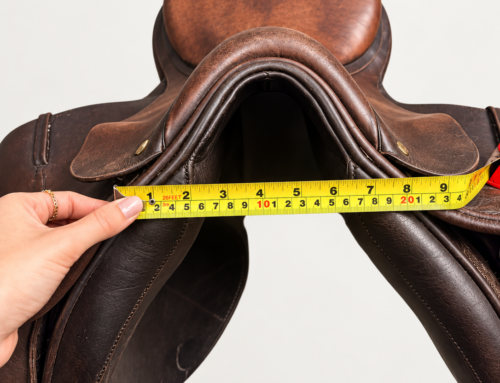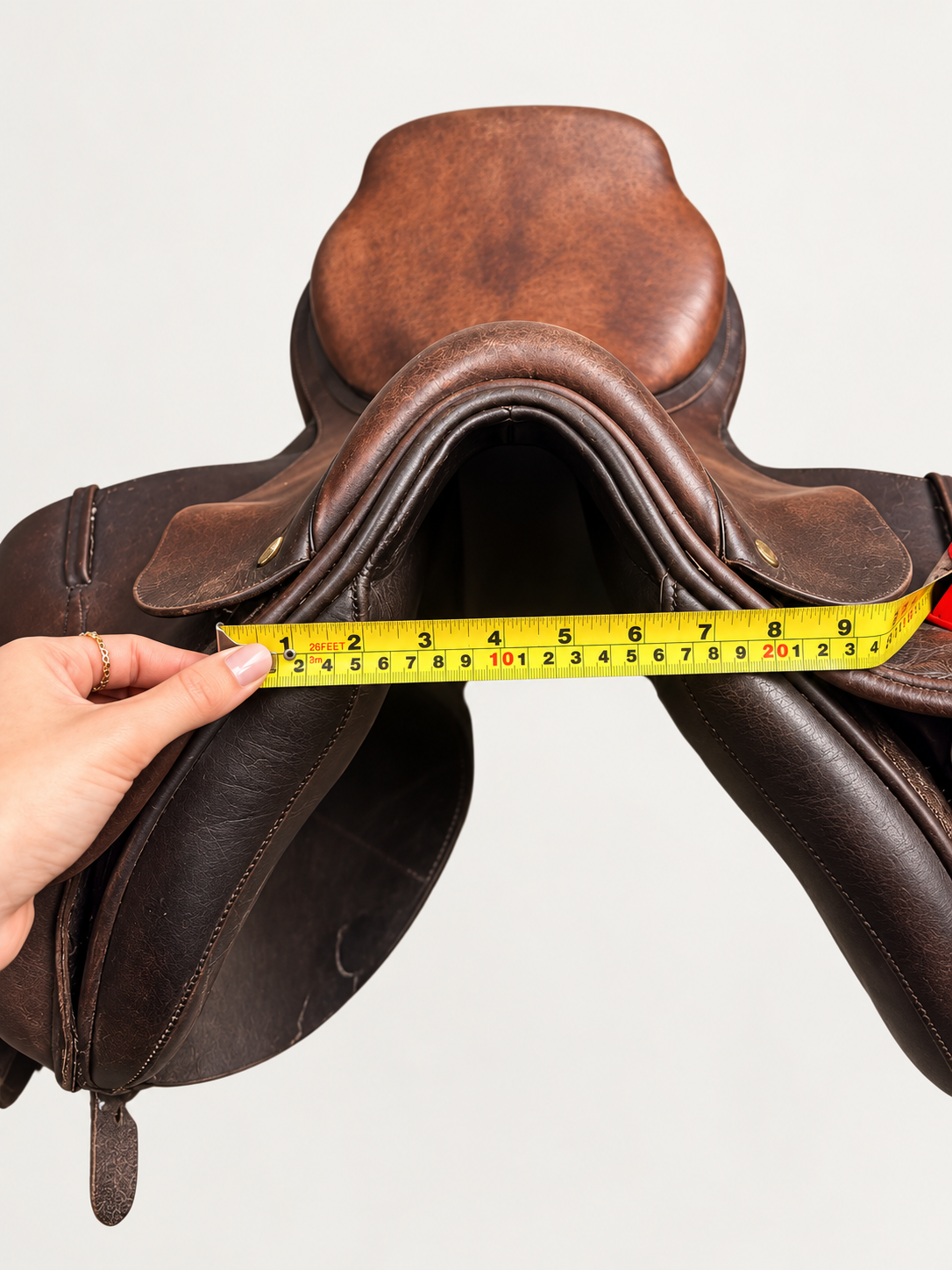
The tree gets most of the attention, but the panels underneath it can completely change how a saddle actually sits on the horse.
When people talk about saddle fit, they often focus on width.
Then perhaps tree shape.
But underneath the tree sits another major part of the fitting system: the panels.

Panels affect how the saddle balances, how pressure is distributed, how close the rider sits to the horse, and how much adjustment is possible later.
Two saddles can sit on similar trees and still behave very differently because the panel design underneath is different.
Panels are not just padding
It is easy to think of the panels as simply the soft part underneath the saddle.
They are much more important than that.
Their:
- depth
- shape
- contact area
- front profile
- rear profile
- gusset design
- flocking or foam construction
all influence how the saddle interacts with the horse.
The panel is effectively the interface between the tree and the horse’s back.
Drop panels
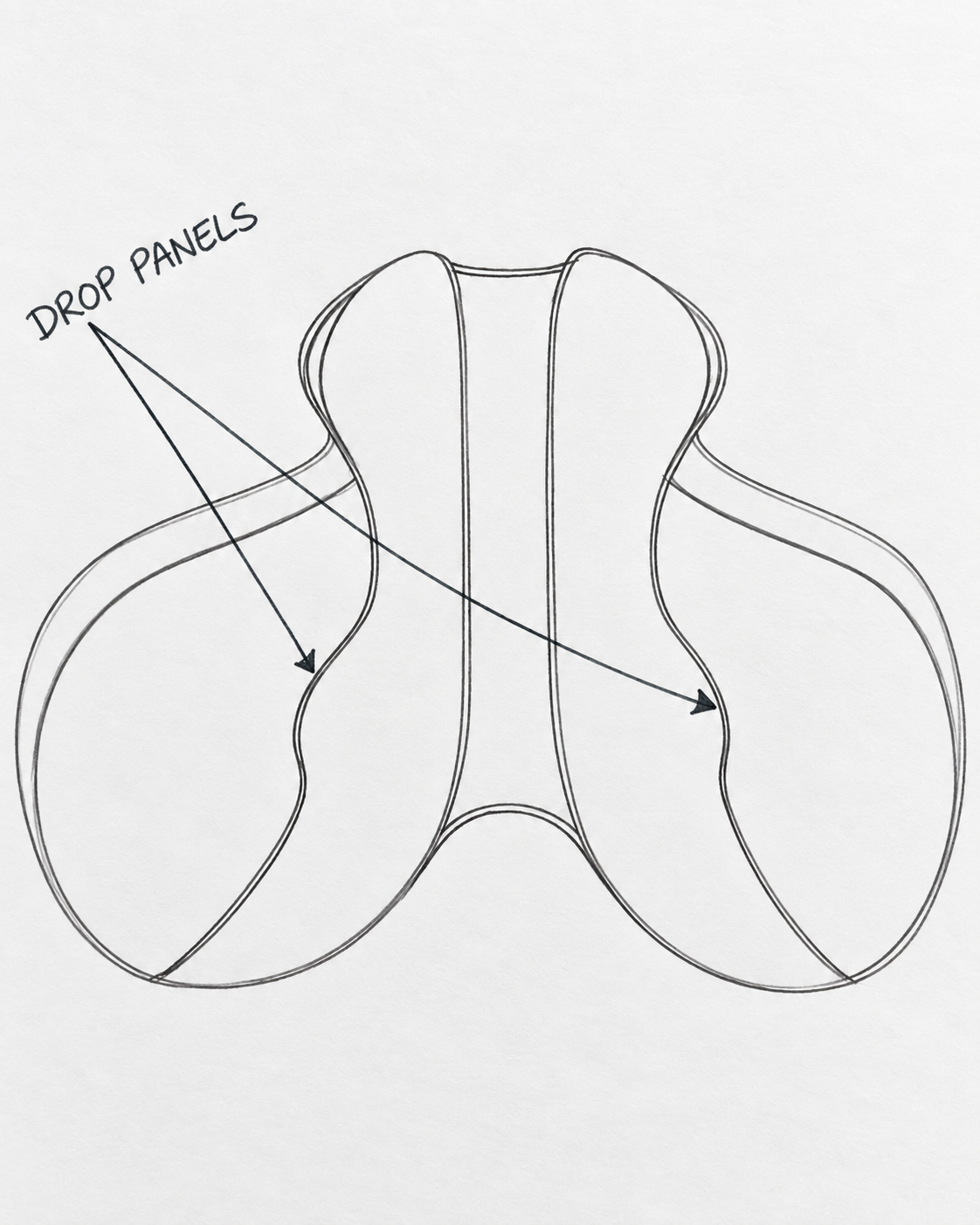
A drop panel adds extra depth through the front section of the panel.
That can help create more support and lift through the front of the saddle.
They can be useful where additional support or accommodation is needed through the front, including some horses with more wither or dips behind the shoulder.
The important point is that this is a panel design feature.
You cannot recreate a drop panel simply by changing the width of the tree.
K panels
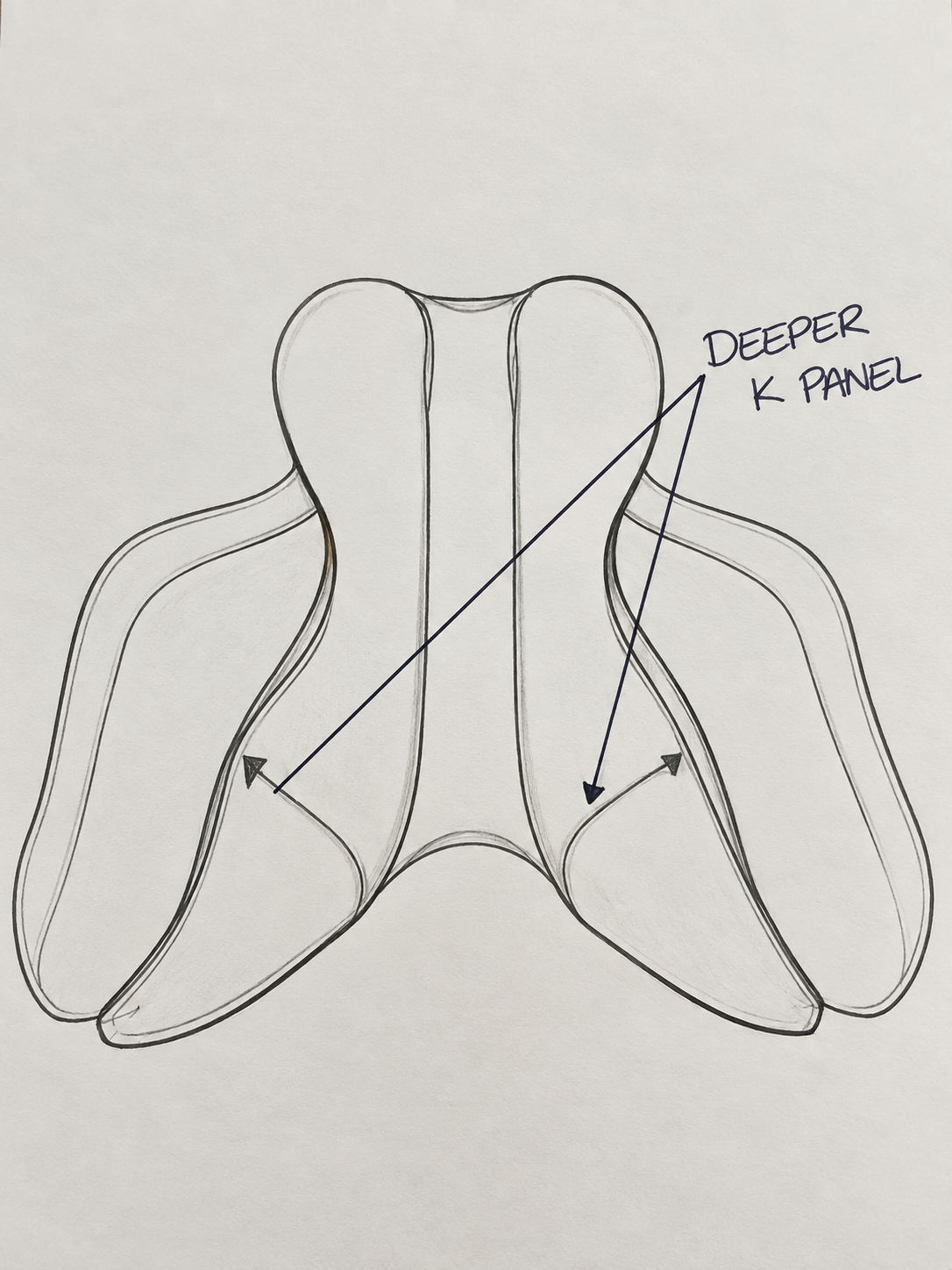
K panels are another way of creating additional depth and support through the front.
They extend the panel more deeply through the front area and can help with particular conformations where more support is needed.
Like drop panels, they are not a substitute for selecting the correct tree.
They are one part of the overall saddle design.
Front gussets
A front gusset adds additional panel depth at the front of the saddle.
This can influence front lift and overall balance.
It may be useful where the horse’s shape requires more support through that area.
Again, the amount and shape of the gusset matter.
A small front gusset and a deep front gusset do not create the same effect.
Rear gussets

Rear gussets influence the back of the saddle.
A deeper rear gusset can create more lift and support through the rear panel.
This can be important for saddle balance, particularly where the horse’s shape would otherwise allow the saddle to sit too low behind.
A shallower or more upswept rear panel behaves differently.
This is why looking at the back of the panel tells you almost as much as looking at the front.
Full panels, half panels and upswept panels
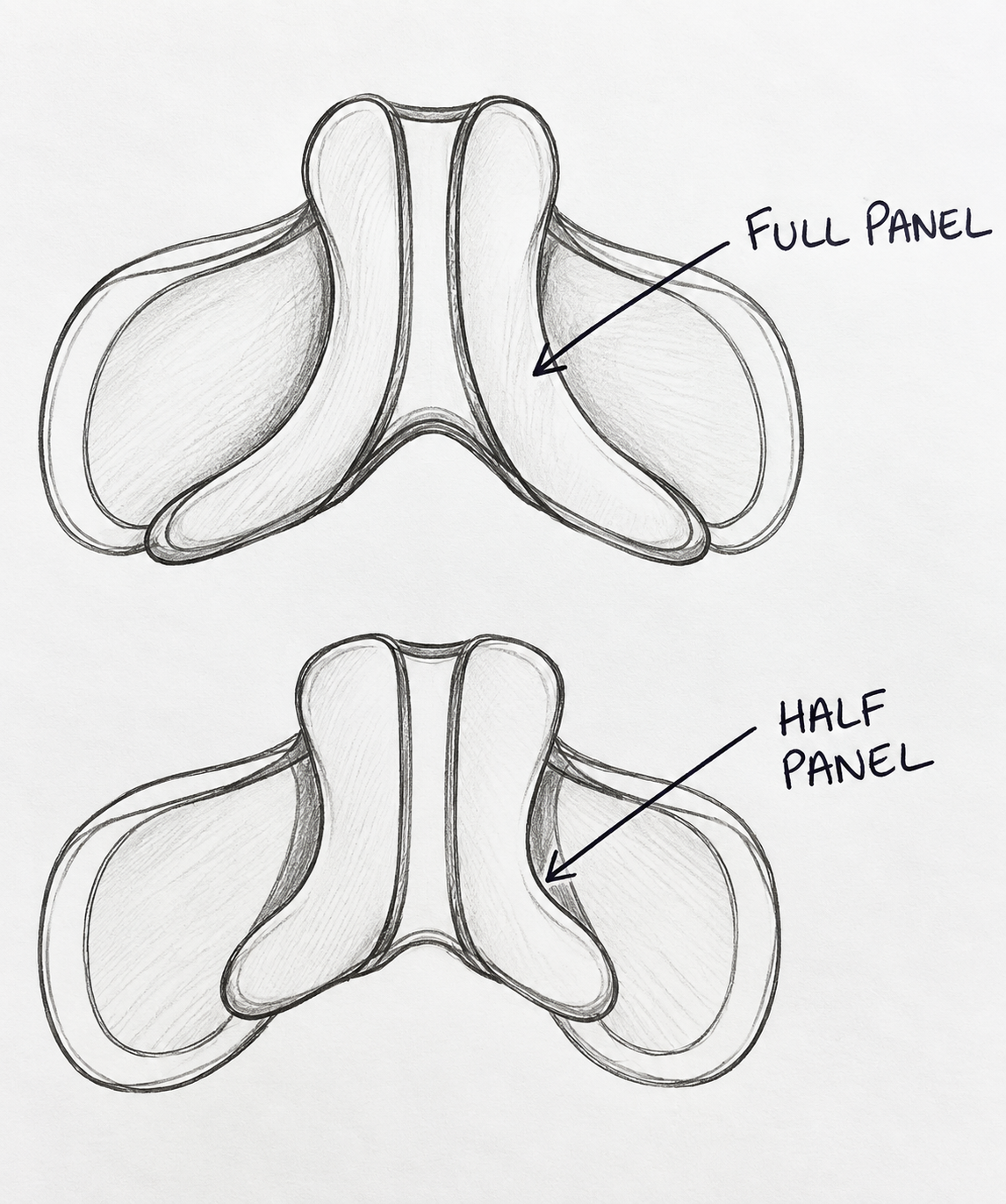
Panel design changes not just how much surface area sits against the horse, but where that surface area is placed.
A full panel runs further down the front of the saddle, extending the supporting area lower along the horse’s side. That extra depth and surface area can help create a more stable saddle.
A half panel stops shorter at the front. That reduces bulk beneath the front of the saddle and can leave more room around the shoulder, which may suit broader, heavier or more powerful horses where too much panel depth would simply add unnecessary volume.

An upswept panel is different again. Rather than changing the front of the panel, it changes what happens at the rear. The panel curves upward and away from the horse’s back instead of continuing flat beneath the cantle.
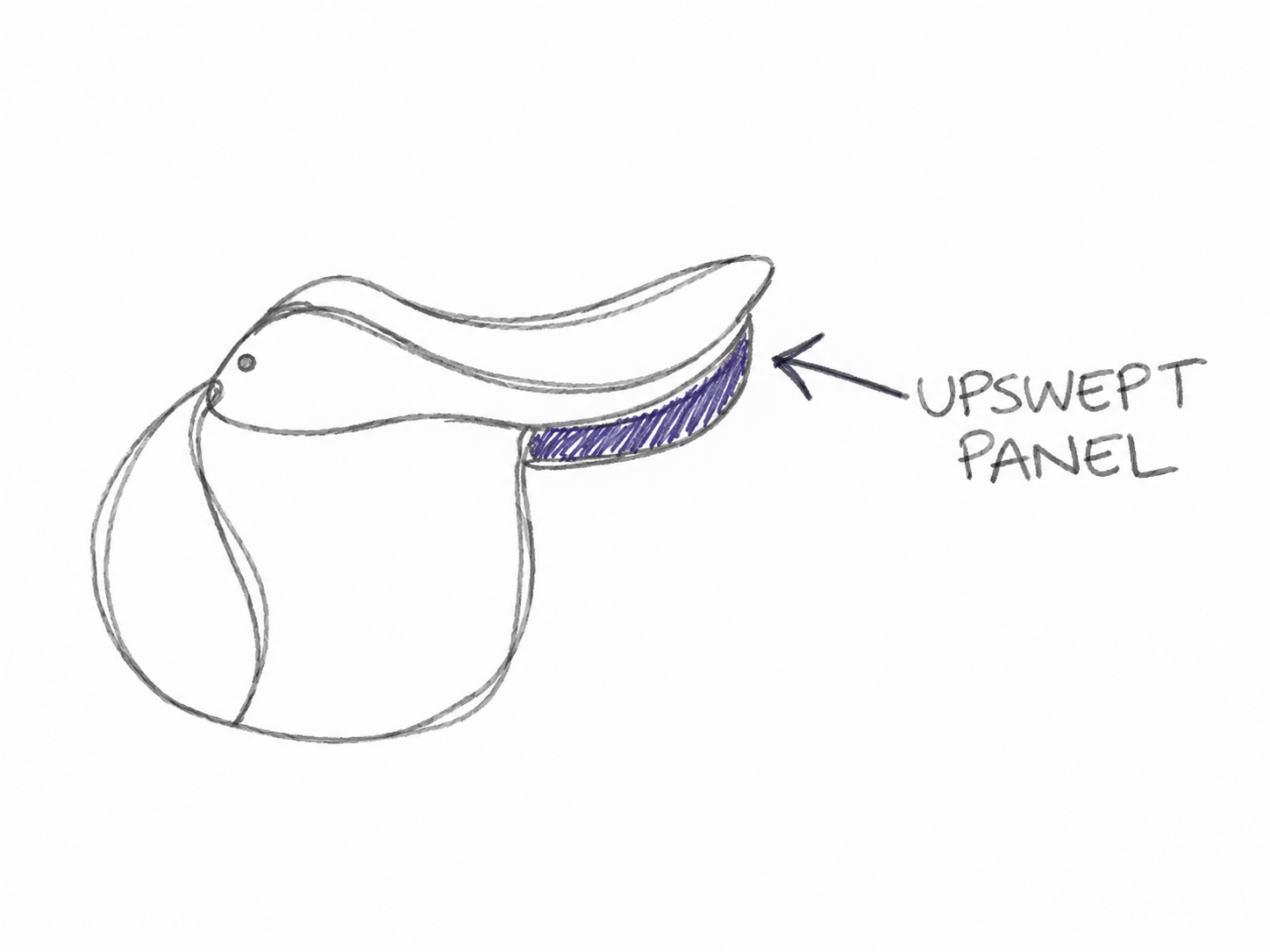
That can be particularly useful for horses with a short saddle-bearing area, for horses whose top line rises towards the croup, or where a longer rear panel would otherwise extend too far back. Upswept designs are also used by some manufacturers as part of a broader design philosophy to reduce pressure over the rear thoracic/lumbar area.
The important caveat is that an upswept panel does not automatically make the saddle itself short enough. A saddle can have a visually short or upswept panel and still sit on a tree whose rails are too long for the horse. Tree length and panel shape need to be assessed separately.
There is no universally better panel style.
A full panel, half panel or upswept panel is simply another design choice that needs to make sense for the horse’s width, shoulder movement, top line and available weight-bearing area.
Wool flocking
Traditional wool-flocked panels remain popular because they can be adjusted.
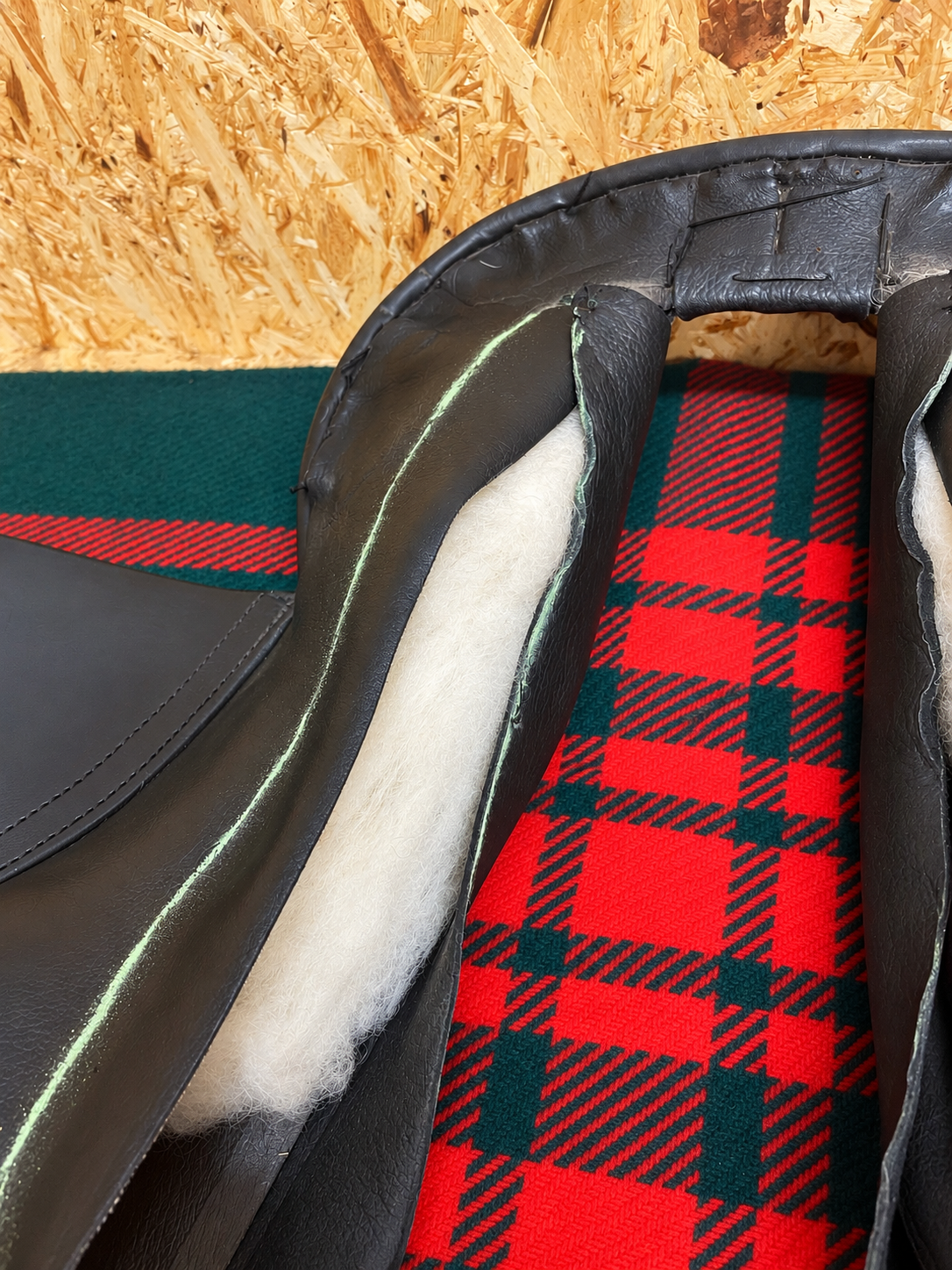
A fitter can add, remove or redistribute flocking to refine:
- balance
- contact
- minor asymmetry
- local support
That adjustability can be particularly useful on horses whose shape is changing.
But wool flocking is not infinitely adjustable.
It cannot turn the wrong panel shape into the right one.
And over-flocking in an attempt to correct a structural mismatch can create its own problems.
Foam panels
Foam panels are common in many close-contact and performance saddles.
They can provide a consistent, streamlined feel and can work extremely well when the original shape suits the horse.
But they do not offer the same kind of routine adjustment as wool flocking.
That means the underlying panel geometry becomes even more important.
If the shape does not match the horse well, there may be less scope for a fitter to make small local changes later.
That does not make foam inferior.
It simply makes it a different fitting system.
Mixed and specialist panel systems
Some saddles use combinations of materials or more specialist constructions.
You may find:
- foam with limited wool adjustment
- latex
- memory foam
- air-based systems
- removable or changeable panel elements
Each system has its own strengths and limitations.
The important thing is to understand what can actually be changed after manufacture, and what cannot.
Why panel design matters so much on the used market
When buying used, people often concentrate on:
- seat size
- width
- brand
- condition
But the panel design can be just as important.
A saddle with the “right” width may still:
- sit too low at the front
- sit too high behind
- bridge
- rock
- extend too far back
- lack enough bearing surface
- create the wrong balance
because the panels are wrong for that horse.
This is why a photograph of the underside and side profile is so useful when assessing a used saddle.
The takeaway
The tree gives the saddle its structure.
The panels determine how that structure is presented to the horse.
So when assessing a saddle, don’t just ask:
What width is it?
Also ask:
What are the panels doing?
Because panel shape, depth and construction can completely change the way a saddle sits.

Behind the Fit
Understand the structure underneath the saddle tree.
Explore more Behind the Fit →